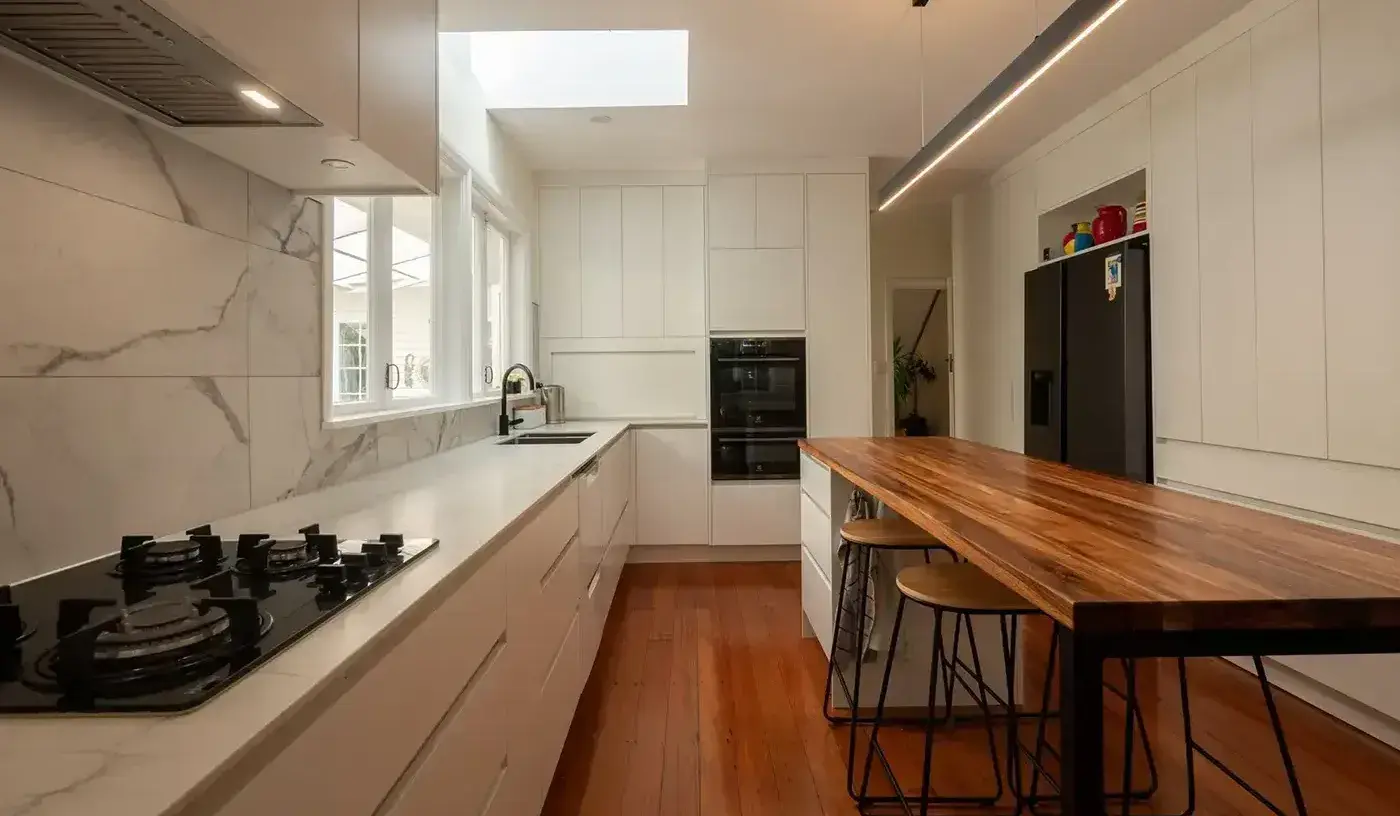
A solid timber benchtop is often the piece clients fall for first, which makes it the hardest thing to cut when the quote comes in over budget. The good news is that you rarely have to. A few well-timed design and material choices can bring a project back in line without losing the warmth that sold the concept.
We've been crafting solid wood benchtops since 1990, and a big part of our job is helping designers find that balance. Sometimes it means a different species, sometimes a thinner top or a simpler feature.
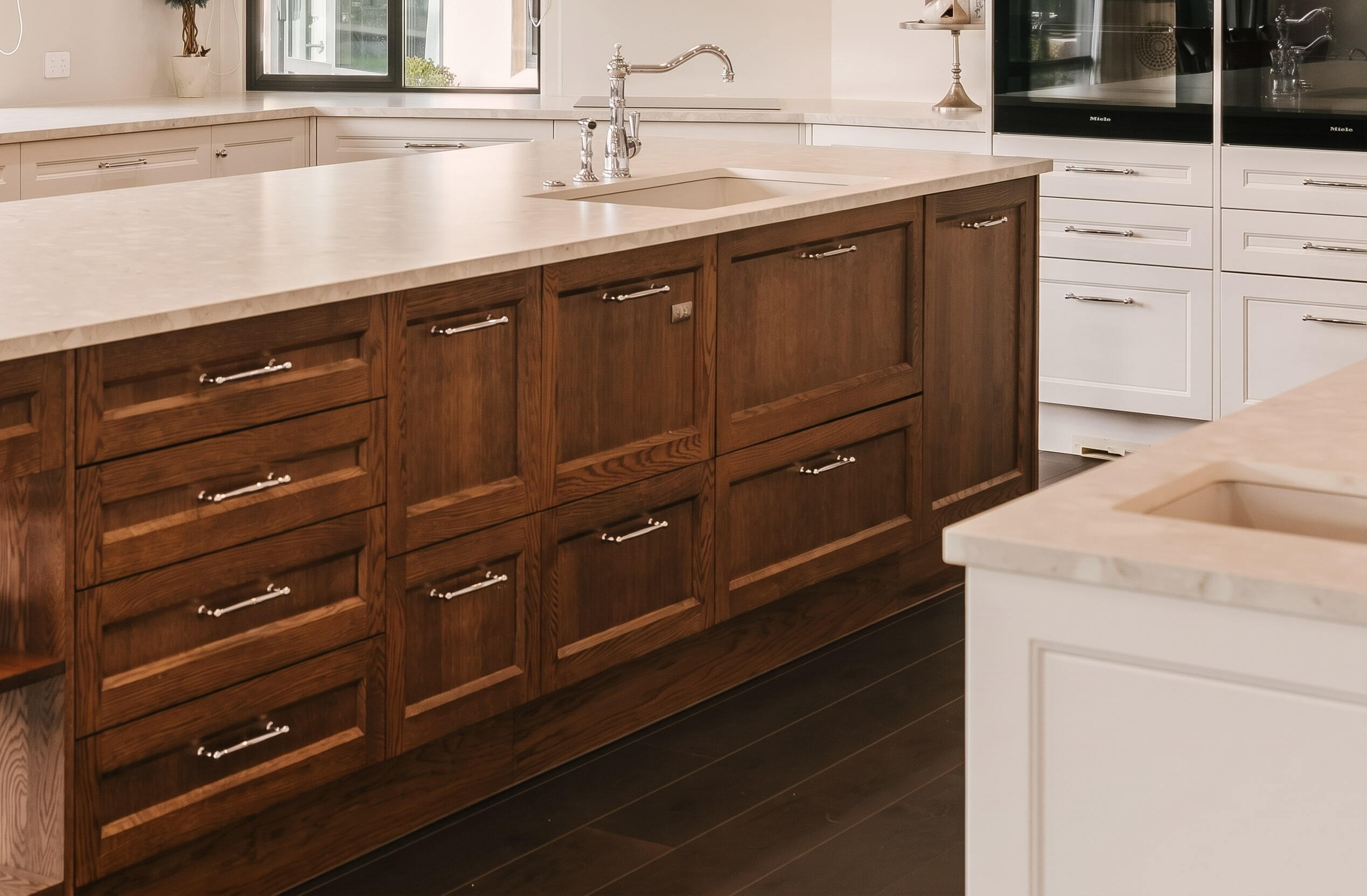
Below, we break down where the cost of a timber benchtop comes from, what clients get at each price point, and which savings are worth making (plus a few that tend to backfire). Yaka Benchtop, Polish Finish - Mastercraft by Your Kitchen
What Drives the Price of a Timber Benchtop
Three choices shape most of the cost of a solid wood benchtop: the timber species, the thickness, and the finish. Features like waterfall ends, sink cut-outs and pop-up power points add to that, but those three set the baseline.
Species is usually the biggest lever. Natives like Rimu and imported hardwoods like American walnut sit at the top of the range, while American oak and ash are more competitively priced and take stain beautifully. Thickness works the way you'd expect: our standard is 40mm, and every step up toward 80mm, 120mm or more adds timber and labour.
The finish matters more than many clients realise. Oil and polish finishes cost less upfront, while our Hi-Build Resin is a 2 to 3mm pour-on coating that fully seals the top and carries a 10-year warranty.
Design features are where budgets can quietly creep. If you do choose to include waterfall ends, for example, you can opt for either a single or a double waterfall end. Selecting a single waterfall end delivers the design impact while keeping extra timber and labour costs to a minimum.
Three Budget Levels for Solid Wood Benchtops
To make early conversations easier, we group our timber benchtops into three tiers. Each one steps up roughly 20% in price from the one before it:
- Bamboo: Our entry-level option and the most economical way to get a wood benchtop. It's hard-wearing, FSC-certified, and can be stained to almost any colour.
- Finger-jointed timber: Made from shorter lengths joined end to end, creating a distinctive "bricked" appearance while minimising waste. Available in European oak and walnut, this option typically costs around 20% more than bamboo.
- Custom bespoke: Made using full-length staves, with grain matching and a wider choice of timber species and thicknesses. This option typically costs around 20% more than the finger-jointed range, although pricing varies depending on the timber and specifications.
The jump from finger-jointed to full-length staves is mostly about appearance and choice. Both are solid timber laminated in 40mm widths, so the decision often comes down to whether the client wants uninterrupted grain running the length of the bench.
Consider mixing benchtop specifications within the same kitchen. A bespoke timber island can remain the centrepiece, while more economical options are used for secondary benchtops or less prominent areas. This allows clients to invest in the features they value most without specifying premium materials throughout the entire kitchen.
Case Study: One Kitchen at Four Budgets
To show how timber selection and specifications influence the final investment, let's look at the Kapiti Kitchen at Raumati Beach, designed by Damian Hannah of German Kitchens and the TIDA 2023 NZ Imported Kitchen winner.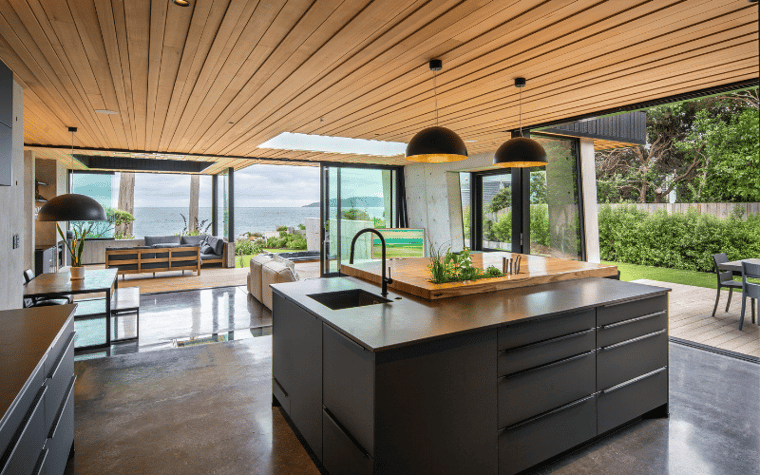 American Ash Benchtop, Hi-Build Resin & Herb Planter - Kapiti Kitchen by German Kitchens.
For this project, American Ash was selected as the starting timber, offering a balance between quality, appearance and price. From there, the benchtop could be specified at different levels depending on the desired finish, features and budget. Here's how the options compare:
Around $4,000 (+GST): European Ash
A finger-jointed European Ash benchtop at 40mm thick, in a polish or oil finish, with no added features. A clean, honest timber top that brings natural warmth to the kitchen at an accessible price point.
Around $6,500 (+GST): American Ash
An upgrade to American Ash with a full-length stave layout, in the same finishes and still without additional features. The uninterrupted grain creates a more refined, consistent appearance, making it a great mid-range option.
Around $10,400 (+GST): Premium American Ash specification
The thickness doubles to 80mm, an undermount herb planter and hidden pop-up power point are added, and the benchtop is coated in Hi-Build Resin with a 10-year warranty. This is the specification selected for the finished Kapiti Kitchen, where the solid American Ash creates a beautiful contrast against the black cabinetry.
$12,000 (+GST) and upwards: Premium timber selection
If the same premium specifications were applied to a higher-value timber, such as Rimu or Walnut, the investment would start at around $12,000 and upwards. This demonstrates how timber selection alone can influence the overall cost, even when the dimensions, finish and added features remain the same.
Swaps That Keep the Look for Less
When a client has their heart set on a premium timber, a lookalike species can get them most of the way there. Rimu is a much-loved native, but it isn't cheap. Yaka is very similar in colour and grain and usually comes in at a lower price, so it's often our first suggestion when Rimu is out of reach.
Staining is another clever workaround. Oak and pine both take stain well, so we can color them to resemble richer, more expensive timbers. USA oak is our most popular choice for stained tops, and with a sample to work from, we can match surprisingly specific tones.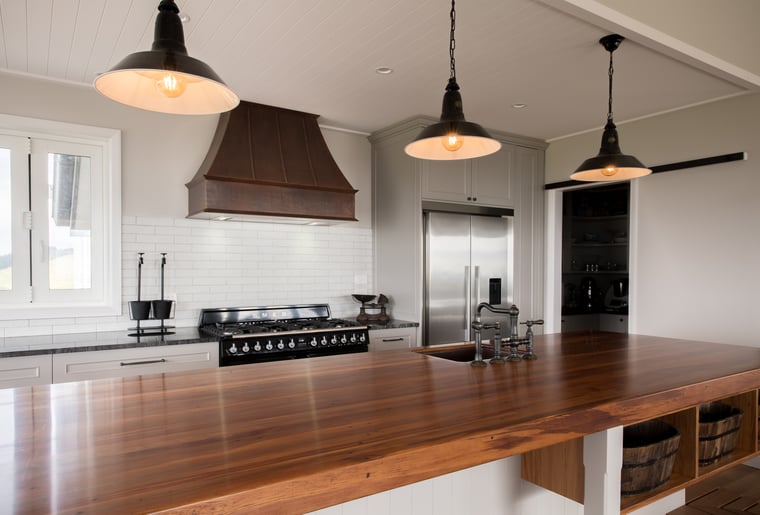 Recycled Rimu Benchtop, Resin Satin Finish
Simplifying features is another option. A single waterfall instead of two, or a standard 40mm thickness instead of a chunky 80mm top, can reduce timber use and machining time without changing the overall design intent.
Where the design allows, there's also the option of using 30mm or 40mm timber and mitring the front edge to create the appearance of a thicker benchtop. This achieves the substantial look of a thicker slab while keeping the benchtop lighter and potentially reducing material costs.
Budget Cuts That Cost More Later
Not every saving is a good one. Ordering a raw sanded top to finish on site lowers the initial cost, but our standard warranties don't cover raw tops, so the client takes on the risk of movement, warping and splitting. Uneven DIY coating makes this worse: too few coats, or a top sealed properly on one side only, can cause it to cup and bow.
Reducing the thickness of a timber benchtop can lower material costs, but thinner tops may require additional support to maintain their strength and stability. If they aren't adequately supported, they can sag or bow over time, potentially offsetting the initial savings.
Cheaper finishes and wider laminations round out the list. Oil and polyurethane finishes can be suitable for some applications, but they generally won't stand up to daily kitchen use like a high-build resin. For benchtops exposed to daily kitchen use, choosing a more durable coating can help protect the timber over time.
Wider laminations can reduce manufacturing labour, but they also increase the risk of splitting, cupping, bowing and warping over time. That's why we use 40mm-wide laminations as standard (and one reason why two quotes for the same timber benchtop can vary by 30%), helping create a more stable and durable benchtop.
When to Make Budget Decisions
Budget decisions are easiest to make at concept stage, before the design is locked in and the client is attached to a particular look. Species, thickness and features like waterfall ends can affect cabinetry and support details, so late changes tend to ripple through the rest of the joinery. Laying out two or three options side by side, like the case study above, makes the trade-offs easy for clients to see.
An accurate quote starts with plans or measurements, plus the timber species, thickness, finish and any cut-outs or features like sinks, cooktops and waterfall ends. It's also important to show any benchtop overhangs and the supporting structure beneath them, so we can allow for any additional support needed or recommend the best solution before the design is finalised. Prices usually change when one of those details moves after quoting (a thicker top, an extra waterfall end, a switch from oil to resin), so settling them early keeps the number steady.
We also recommend having joins and cut-outs, including sink fittings, done in our factory. That way the top arrives fully sealed and ready to install, which avoids costly fixes on site.
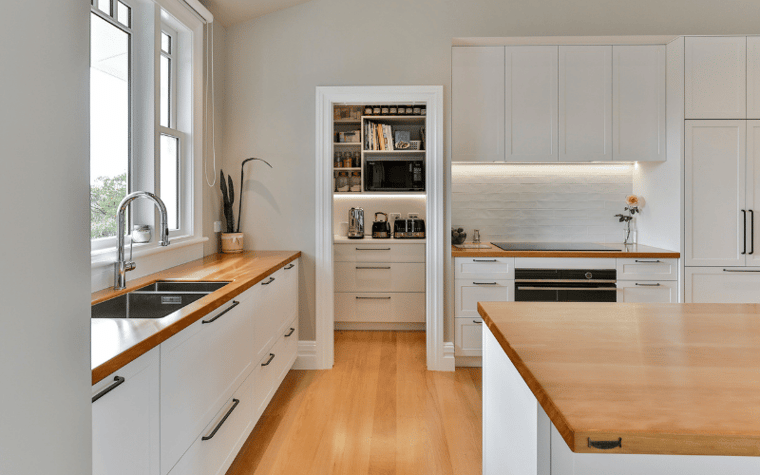 Recycled Kauri Tops, Resin Satin Finish - Matakana Kitchens.
Start the Budget Conversation Early
A tight budget doesn't have to mean a compromised kitchen. With the right species, a sensible thickness and a finish that lasts, most clients can have the timber benchtop they want at a price that works.
If you're working on a project with a tight budget, we're happy to help you weigh up the options. Send us your plans and request a quote from our team to get started.